From history to memory
March 20, 2026
Share this post
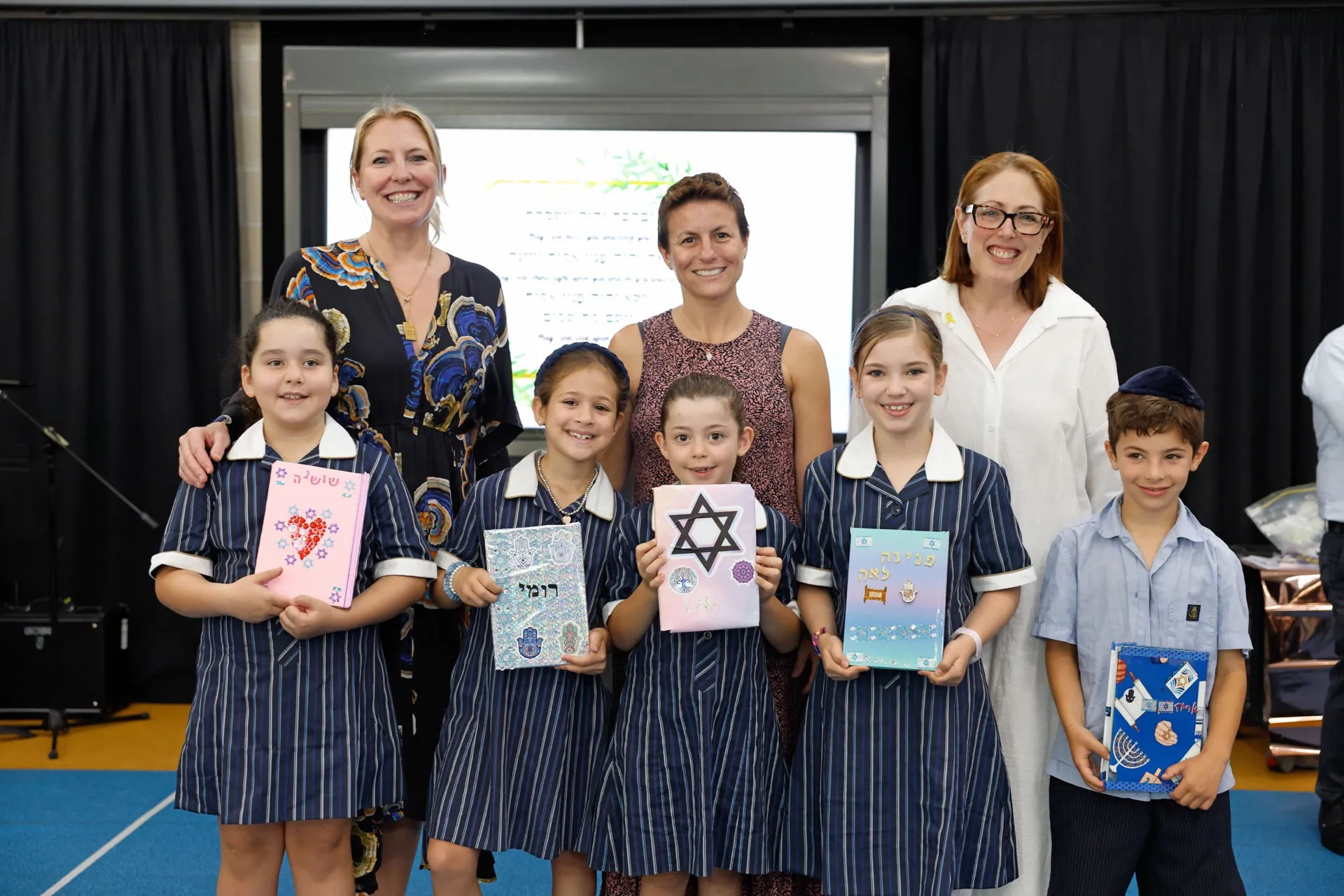
Every year, one of the annual highlights for our students is the model Pesach s’darim that occur in the final weeks of Term 1. I had the great privilege of participating in a number of our kindergarten S’darim this week where some of our youngest students delighted their parents, grandparents and special friends with their knowledge, enthusiasm and joy in sharing in our ancient tradition.
I have crystal clear memories of when I was a KDS student how proud I was each year to perform at such times in front of my parents and grandparents.
While the kindergarteners dressed up as frogs, Israelites and pharaohs are undoubtedly adorably cute, these moments are far more serious. The reason that our families feel such nachat (pride) in these moments is that they truly represent the earliest stages of passing the torch of Jewish identity and the transmission of our culture and practices through the generations. I know that many families feel a sense of fulfilment and relief when their children take their turn in bringing these traditions into their hearts.
In this column last year, I shared an insight regarding the development of contemporary Hebrew that I particularly resonate with at this time of year. When Eliezer Ben Yehuda and his contemporaries were working to modernise the Hebrew language they recognised that there was no existing Hebrew word for history. The closest was “zikaron” which means memory. After much debate, the scholars decided to adopt “historiya” as an adaptation of the common parlance in many other languages.
I think that something is lost in this. The distinction between history and memory is that one is objective and the other is inherently subjective. Memory places us within the story. This is a lesson which is embedded in the tale of the four children that many of us will recount at our own sedarim. In this, the wicked child cannot find a personal connection with the story. They say, “What does this mean to you?” and not “What does this mean to us?” We are taught that engagement means finding a personal link and experiencing the slavery and the exodus as though they happened to us directly.
In line with our school’s Progressive Jewish philosophy, this is a question that is at the basis of our model of informed choice. Our students are invited to develop their Jewish toolkits - knowledge of the songs and stories and skills in their capacity to perform and participate in the ritual - and then there is a secondary invitation to find a connection and to practice in a way that rings true at a personal level. This is putting themselves back into the story and thus turning it from historiya to zikaron.I wish you all great joy and nachat in the upcoming participation in our story of freedom.
Shabbat Shalom,
Marc Light, Principal